
Work / The multi-camera gimbal pod
The multi-camera gimbal pod
I wrote the control software and device drivers for the second version of a pod of three cameras on motorised pan heads under a helicopter. It stayed an R&D prototype.
Re-creation. Nothing in it comes from the real pod: no device names, protocols or settings. The heads, the cameras, the flight and the line are simulated.
What the real one does
The pod hangs several sensors on motorised pan heads, suspended below a helicopter, and my software steers them from a controller. The software shows where each head points, its limits and each camera's settings. I wrote all the control software and device drivers for the pod's second version, from the makers' protocol documents. It stayed as a R&D prototype.
- Heads move one at a time or together. Sync lines the others up with the selected one, and origin brings them home. Soft limits and a turn counter stop a head from swinging into the airframe or winding up its cables. Interval capture fires the selected cameras on a timer, and ISO, shutter, aperture, focus and exposure compensation are set per camera from the pad.
- Each device runs on its own thread with a command queue, so a slow camera never stalls the heads.
How the demo works
Steer three cameras under a helicopter: pan the heads, sync them, set limits, and fire them along a power line.
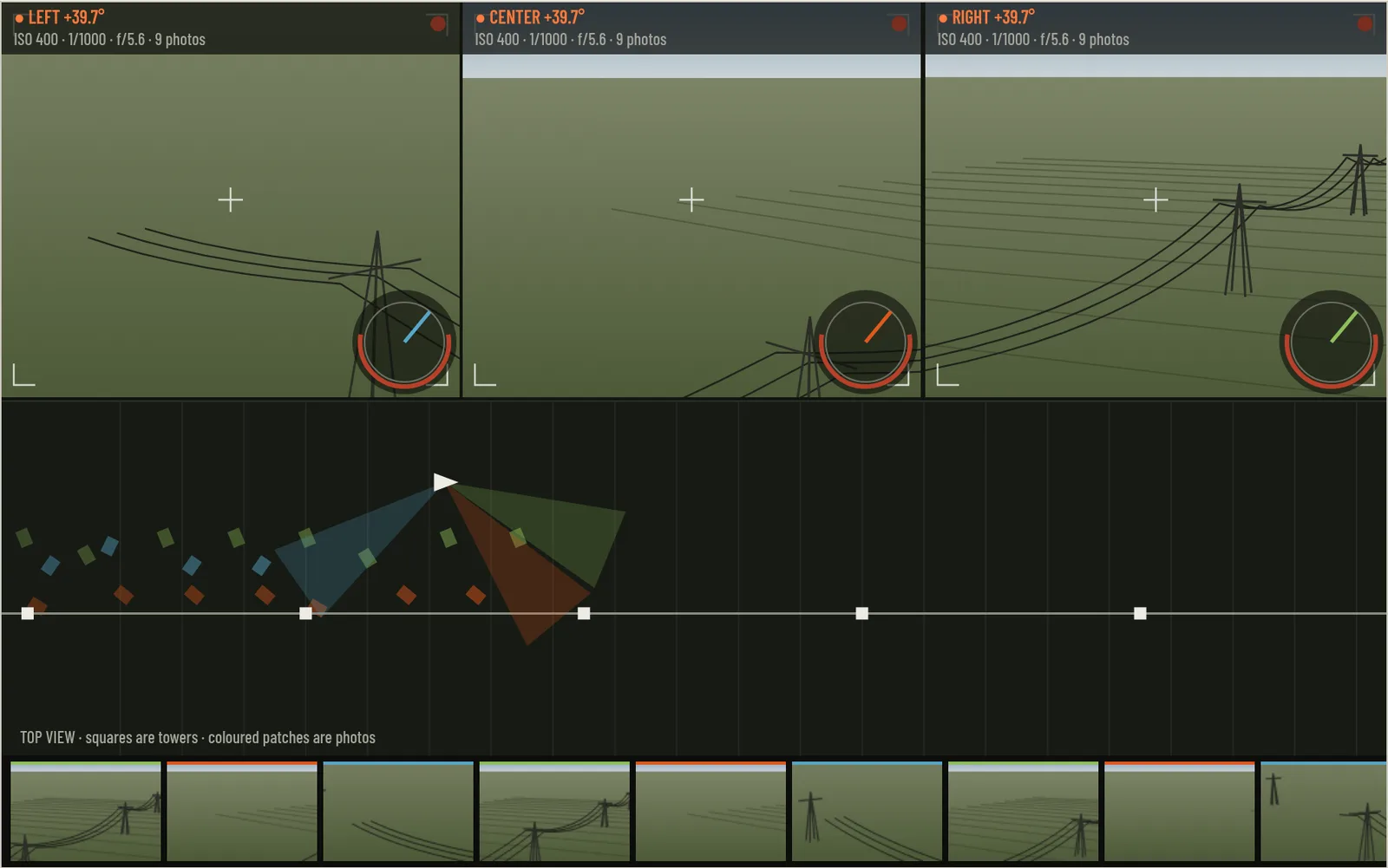
The top row shows what each camera sees from the pod, with its head angle, its limits on the small dial and its settings. The left camera looks back and a little further down, so it sees the line from the other side. ISO and shutter change the exposure, so a bad setting shows at once. The middle is the ground from above, with the helicopter flying along the line, a wedge for each camera and a patch for every photo. The strip at the bottom holds the last photos, newest first.
At the start the heads follow the towers ahead and the cameras fire once a second. Take over with the buttons, the keyboard or a gamepad: select heads, pan them, sync the others to the selected one, or send them back to origin. Set a limit where a head points now and watch it stop there.
In the real pod each head and camera has its own driver thread and command queue, so the pilot's stick stays responsive while a camera is busy. The demo keeps that shape: input changes a target, and each head moves toward it at its own speed, within its limits.